
Common Question
In 2025-26, CQ asks the Hopkins community:
What Is health?
This year, the Common Question is celebrating the Johns Hopkins University Sesquicentennial by asking a question central to our institution’s founding: What is health?
Of course, this question has implications for the many Hopkins students, faculty, staff, researchers, and affiliates engaged in medicine, nursing, public health, medical research, the medical humanities, and more, but notions of health extend far beyond the world of clinical practice and research. In addition to examining what makes individuals physically, mentally, and emotionally healthy, we’ll also be examining societal health, spiritual health, economic health, maternal health and asking additional complex questions about the nature of healthy cities, democracies, universities, and more.
As JHU turns 150 years old, we invite you to interrogate your own understanding of health and to carry on the long Hopkins tradition of discovering and inventing solutions to today’s most challenging problems.
—
Upcoming Common Question Events
This year, we invite you to join us in the Writing Center and elsewhere on Homewood campus for a series of events exploring this year’s Common Question. While all events are free and open to the campus community, we recommend registering early to save your spot.
 | The Common Question is proud to co-sponsor a screening of Listen to Me, a powerful documentary that centers the voices of Black women and birthing people as they navigate pregnancy, birth, and care in America. Told through first-person stories, the film exposes the deep racial disparities in maternal health while honoring the strength, grief, joy, and resilience of its subjects. The event will be followed by a panel discussion that includes filmmaker Stephanie Etienne and a catered reception. Saturday, Apr. 11, 2026 |
 | JHU’s Common Question began its programming year in partnership with the Johns Hopkins Institute for Planetary Health (JHIPH) for an event we called The World Cafe, during which we shared a meal, discussed the field of planetary health, and began important conversations about the Earth crisis. We are proudly ending the academic year with a second collaboration with JHIPH during which we’ll continue those conversations, this time with a particular eye toward how we can work across disciplines to better understand and address the various challenges posed to human health and flourishing by the Earth crisis. Join us on April 20, 2026 from 12:00–1:30 p.m. in the Glass Pavilion (Homewood campus) for the Planetary Health Action Lab, where we’ll work to turn environmental challenges into concrete action. We’ll serve a delicious lunch and reserve time for networking with professionals working in the field of Planetary Health.
|
 | Whose Stories Carry You?: A Call for Submissions by Writers at JHU JHU’s Common Question & The Writing Center are proud to co-sponsor the production of a forthcoming anthology of work by JHU affiliates (undergraduate and graduate students, faculty of all ranks and tracks, staff, postdocs, fellows, etc.) Stories Between Generations will be published digitally and as a limited-run print magazine in during AY 2026-27 and will feature fiction and creative nonfiction that explores and examines intergenerational relationships, collaborations, friendships, and cooperation. Submission Guidelines:
Submissions deadline has been extended to |
How Do You Define Health? |
| We invite JHU community members to answer the 2025-26 Common Question |
—
Scholars at the Stavros Niarchos Foundation Agora Institute at Johns Hopkins examine how generative AI is reshaping our politics and policy-making and ask whether AI can help us improve the health of American democracy. Photo by Element5 Digital on Unsplash The human body is better at fighting infections during the day. Find out why in this episode of Short Wave. Image via NPR’s Shortwave Podcast. Red Cross Nurses Handing Out Wool for Knitting by William H. Johnson, born Florence, SC 1901-died Central Islip, NY 1970. Smithsonian American Art Museum, Gift of the Harmon Foundation. See the collection here. Image by William H. Johnson, via the Smithsonian Institution. Through January, the Baltimore Museum of Art’s suite of environmentally focused exhibitions, Turn Again to the Earth, invites visitors to consider the relationship between the Earth and the arts. On Thursday, Sept. 16th, the BMA will host College Night. Students with a valid college ID are invited to view and make art and to make new friends while enjoying tasty snacks. Photo by Mike Steele via Flickr, CC License A new brain-computer interface represents a breakthrough in neural prosthetics, allowing users to merely think words and have them appear on a screen. The potential to improve a patient’s ability to communicate are massive, as are the ethical implications of so-called “inner-voice translators.” Read the full published academic research in Cell. Photo by Volodymyr Hryshchenko on Unsplash In this episode of the Bloomberg School of Public Health’s Public Health On Call podcast, producer Lindsay Smith Rogers reports on the ongoing effort to make Baltimore’s Inner Harbor safe for swimmers. For more episodes of Public Health On Call, visit their YouTube page or subscribe in Spotify or Apple Podcasts. Photo by Brendan Beale on Unsplash In the 20th century, antibiotics revolutionized healthcare and paved the way for advanced medical protocols and procedures, but just as fossil fuels both advanced and encumbered human societies, the overuse of antibiotics now poses a threat to human health. Biologist Liam Shaw argues that a more judicious approach to using antibiotics is the best way forward. Photo by Roberto Sorin on Unsplash While AI chatbots can seem informed, clever, and even charming, most mental healthcare practitioners warn against using the technology in place of a human therapist. Photo by Christina Morillo on Pexels. Biostatistician Jeffrey Morris on the necessity—and the challenges—of addressing vaccine misinformation in a politically polarized age. Vulture‘s Nicholas Quah talks to Dr. Lukas Ramcharran of the Johns Hopkins University School of Medicine about what HBO’s breakout hit The Pitt gets right (and wrong) about emergency medicine. Photo by National Cancer Institute on Unsplash At the Johns Hopkins University Hospital, music is more than mere entertainment. It’s also a vehicle for attaining better physical, mental, and emotional health. For a decade, the Johns Hopkins Center for Music and Medicine has investigated how the body, mind, and music are related and how music can be used in the treatment of depression, Alzheimer’s, stroke, and more. Photo by Pavel Danilyuk on Pexels You’ve probably heard that you should be taking 10,000 steps a day in order to maintain good health, increase your odds of living longer, and improve your cardiovascular fitness. What you might not know is that the number of recommended steps originated in the 1960s, when the Japanese Yamasa Clock company was marketing its mechanical pedometer. More than 70 years later, a new systematic review and scientific meta-analysis is giving physicians and the public a clearer picture of how many daily steps are beneficial to human health. Listen to the story here, and read the scientific study here. Photo by Sincerely Media on Unsplash In May, the Federal Drug Administration approved an inexpensive and noninvasive blood test developed by a team including Johns Hopkins scientists that could help physicians detect Alzheimer’s disease significantly earlier than previously possible. Photo by Hush Naidoo Jade Photography on Unsplash. What do we gain and what do we lose when we use war metaphors to describe our experiences with illness and disease? On this episode of the Defining Moments podcast, Dr. Joe Bianco discusses the common practice of describing medical interventions using war metaphors with Dr. Elena Semino, Distinguished Professor of Linguistics and English Language at Lancaster University. In association with a special issue on COVID-19, the Bulletin of the History of Medicine and the Program in Arts, Humanities, & Health at the Johns Hopkins School of Medicine have sponsored an exhibition documenting Baltimore’s experiences of the COVID-19 pandemic. Curated by Baltimore-based photographer J.M. Giordano, the exhibition captures the tumult and some tender moments during of the lockdown era in Baltimore. Learn more and view images from the exhibition here. Photo by Mark König on Unsplash Following the lockdown era of the COVID-19 Pandemic, scientists around the globe have been examining the relationship between social isolation and neurological health, and the initial findings are telling. Learn more about research that has implications for future human-staffed space exploration, field research in remote locations, mental healthcare professionals, the criminal justice system, quarantines, and more. Photo by Milad Fakurian on Unsplash In April 2024, JHU launched the Johns Hopkins Institute for Planetary Health (JHIPH) to accelerate cross-university collaboration in addressing the degradation of Earth’s natural systems and its impacts on human health and well-being. Learn more about this bold interdisciplinary initiative and about how scientists, educators, researchers, and policy makers are collaborating to address the urgency of this moment and to advance solutions that safeguard health on our rapidly changing planet. Are you a JHU student looking for health and wellness resources? Johns Hopkins has a robust range of health and wellness-related services and information available to affiliates, including resources related to mental health, physical health, spiritual health, and more. Photo by Gang Hao on Unsplash.
Explore These Sources
Can AI Help Improve the Health of American Democracy?
Why you fight infection better in the daytime
A visual history of women in public health
With Turn Again to the Earth, environmental health is front and center at the Baltimore Museum of Art
How a new neural prosthetic bypasses physical speech and turns thought into language
The dream of a healthy Inner Harbor is alive in Baltimore
What antibiotics and fossil fuels have in common
Can an AI chatbot be your therapist? Experts warn against it.
Discussing vaccines amid the partisan divide
What HBO’s breakout medical drama The Pitt gets right about emergency medicine, according to JHU’s Dr. Lukas Ramcharran
Using music to improve health, wellness, and recovery at Johns Hopkins University Hospital
How many steps should you be taking each day? New research provides an answer.
A game-changing blood test for the early detection of Alzheimer’s
On the complexities of using war metaphors to describe medical treatment
Five years later, revisiting images of the COVID-19 Pandemic in Baltimore
Social isolation may lead to physiological changes to the brain
What is Planetary Health?
Health and Wellness Resources for Students at JHU
—
Previous Common Question Events
Fall 2025
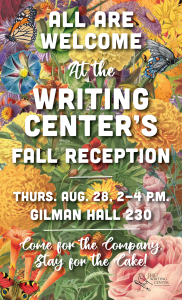 | JHU’s Common Question is housed in the university’s Writing Center, which itself is part of the University Writing Program. The center serves all undergraduates, graduate students, faculty, and alumni in the Krieger School of Arts and Sciences and the Whiting School of Engineering. The Writing Center offers individual conferences with trained peer tutors on any type of writing, and appointments are available to writers at any stage of the writing process. We hope you’ll visit us in Gilman Hall 230 to learn more about the UWP, the Writing Center, and the Common Question. |
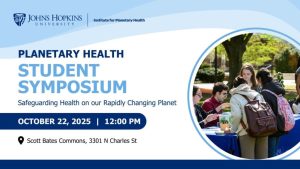
 | On Thursday, September 25th from 3:30 – 6 p.m., the Johns Hopkins Institute for Planetary Health (JHIPH) and JHU’s Common Question hosted its first-ever Word Café, and interactive discussion and activity featuring great food, critical conversation, and networking with faculty, staff, and students interested in creating solutions to the Earth crisis. JHIPH’s mission is to catalyze scholarship and practice of Planetary Health by bringing together a community of faculty, students, and staff united by their commitment to work across disciplines to address the urgency of the Earth crisis and its impacts on humanity. JHU’s Common Question is dedicated to investigating our biggest and most abiding questions in an effort to further scholarship, encourage cross-disciplinary collaboration, and leverage the immense intellectual capacity of our student body and faculty. Please note: The World Café has concluded and registration is now closed. That said, please join the JHIPH for its Planetary Health Student Symposium on Wed., Oct. 22 from Noon – 3:30 p.m. in Scott Bates Commons.
|
 | That’s right! The third annual University Writing Program Expo is taking place on Thursday, Nov. 6th from 5:30 – 7:30 p.m. in the Glass Pavilion on JHU’s Homewood Campus. We’ll showcase student writing and try our hands at a variety of live writing activities sponsored by the Common Question, the Writing Center, the Hopkins Review, JHU Press, Bluejays and Poets, Writers’ Warehouse, the Milton S. Eisenhower Library, Letters Without Limits, URSCA, and more! Come write a poem, make a zine, and help us celebrate all things writing-related at Johns Hopkins! Also: Baltimore’s beloved Ekiben will be handling the food, and dessert will be handled by Taharka Brothers Ice Cream (including two non-dairy options!). No registration needed. This event is open to all JHU affiliates. |
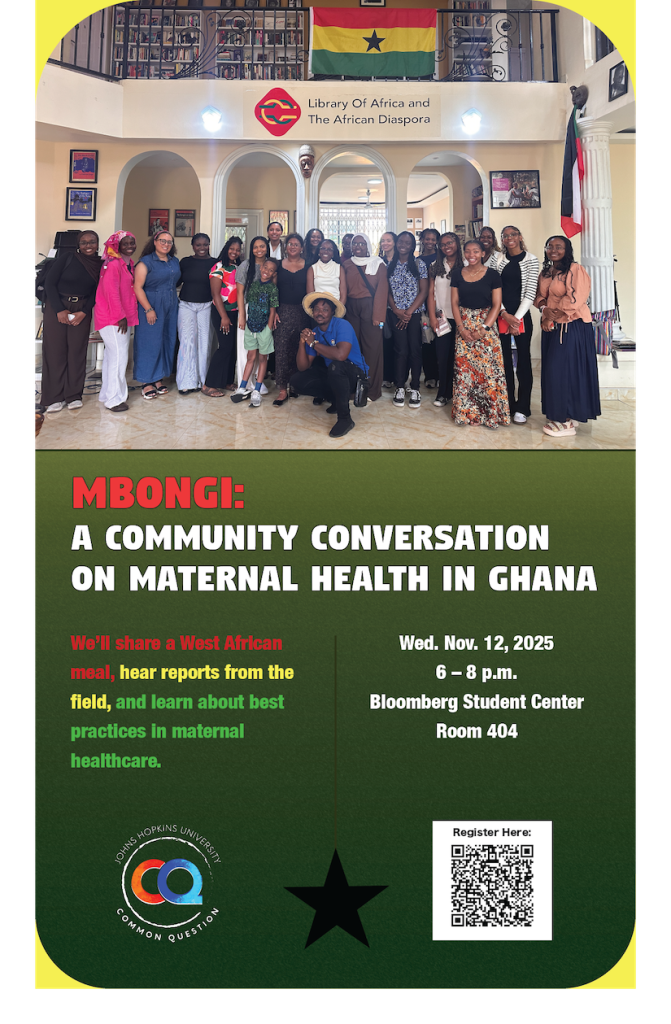 | Mbongi: A Community Conversation on Maternal Health in Ghana Join JHU’s Common Question for an evening exploring students’ reflections on maternal health in Ghana. We’ll hear from JHU undergraduates who traveled to Ghana in the summer of 2025 to learn from Ghanaian public health professionals how historical and colonial histories impact contemporary birth outcomes in Ghana. We’ll share a West African meal, hear reports from the field, and learn about best practices in maternal healthcare. Wed. Nov. 12, 2025 |
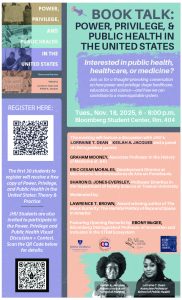 | Interested in Public Health, Healthcare, Medicine, Social Sciences, Policymaking & History? Join us for a thought-provoking and critical conversation about how power and privilege shape American healthcare, inform policy, education, the sciences, and research—and learn how we can contribute to a more equitable system for all. On Tuesday, Nov. 18th from 6 – 8 p.m., join JHU’s Common Question, the Bloomberg School of Public Health, the Writing Center, and the major in Medicine, Sciences, and Humanities for a conversation with JHU’s Lorraine T. Dean (BSPH) and Keilah A. Jacques (SoN) and a panel of distinguished guests including JHU’s Graham Mooney, associate professor in JHU’s School of Medicine; Eric Cesar Morales, Development Director at Movimiento Administradores de Arte en Pensilvania; Sharon D. Jones-Eversley, Professor Emeritus in the Department of Family Science at Towson University; and Lawrence T. Brown, award-winning author of The Black Butterfly. The event will feature an interactive panel discussion with introductory remarks by Ebony McGee (School of Education) and a shared meal. The first 30 JHU students to register will receive a free copy of Jacques and Dean’s groundbreaking edited volume from Oxford University Press Power, Privilege, and Public Health: Theory & Practice. Students are also encouraged to join the conversation early by participating in the Power, Privilege, and Public Health Visual Discussion & Contest. First place will win a Bose Portable Bluetooth Speaker, a Champion brand JHU Sweatshirt, and a Common Question mug. Second place will win a Champion brand JHU sweatshirt and a Common Question mug. Enter the Visual Discussion & Contest here: http://bit.ly/48Gedw2 |
 | JHU’s Common Question is once again delighted to partner with the Writing Center for this fall’s Long Night Against Procrastination, an evening dedicated to providing time, space, writing tutoring, and tons of snacks to students looking to get a jump on their final projects, papers, problem sets, and exams. This year’s event will begin with a Common Question-sponsored presentation by Dr. Jacki Stone, executive director of Student Well-Being here at JHU. Dr. Stone will engage students in a discussion of healthy study habits and will address the most common barriers to succeeding during times of elevated stress and pressure (like finals!). We’ll have a variety of healthy snacks, wellness teas, and swag on hand and, as always, this program is free and open to the entire campus community. The event starts at 7 p.m. on Tuesday, Dec. 9 in the Writing Center (Gilman Hall 230) and will be immediately followed by this year’s installment of the Long Night Against Procrastination. No registration required.
|
 | The Helena Hicks Speakers Series
JHU’s Common Question is proud to be a publicity partner for the next installment of the Billie Holiday Center for Liberation Arts’ Helena Hicks Speakers Series. Please join us for an exciting lecture titled Alleviating Racial & Income Health Disparities in American Medical Treatment given by Bloomberg Distinguished Professor Lisa Cooper for our third Helena Hicks Speaker of the season. This event is FREE and open to the public. Please register here! Dr. Lisa Cooper (she/her) is a Liberian-born general internist, social epidemiologist, and health services researcher. She was one of the first scientists to document disparities in the quality of relationships between physicians and patients from socially at-risk groups. She then designed innovative interventions targeting physicians’ communication skills, patients’ self-management skills, and healthcare organizations’ ability to address needs of populations experiencing health disparities. She is the author of over 200 publications and has been the principal investigator of more than 20 federal and private foundation grants. She has also been a devoted mentor to more than 75 individuals seeking careers in medicine, nursing, and public health. Dr. Cooper has received several honors for her pioneering research, teaching, and mentoring. She has also been recognized by several community organizations for her community engagement and advocacy to address health disparities. Currently, Dr. Cooper directs The Johns Hopkins Center for Health Equity, where she and her transdisciplinary team work with stakeholders from healthcare and the community to implement rigorous clinical trials, identifying interventions that alleviate racial and income disparities in social determinants and health outcomes. The Center also provides training to a new generation of health equity scholars and advocates for social change with policymakers. |
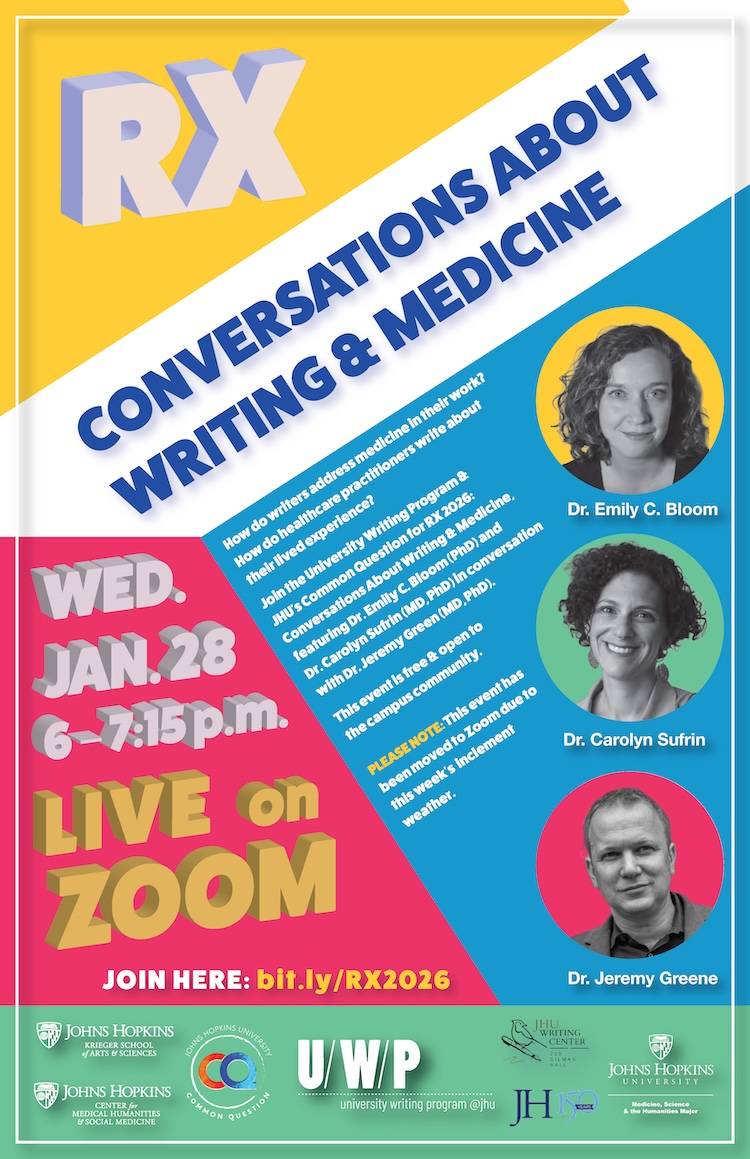 | The University Writing Program and JHU’s Common Question are proud to announce the second annual RX: Conversations in Writing & Medicine event, this year featuring Dr. Emily C. Bloom (Phd) and Dr. Carolyn Sufrin (MD, PhD) in a conversation moderated by Dr. Jeremy Greene (MD, PhD). RX: Conversations About Writing & Medicine brings together invited speakers whose work bridges the sciences and the humanities to explore how storytelling, research, and clinical experience shape our understanding of health and healing. Through dialogue between writers, physicians, scholars, and artists, this series examines the intersections of narrative, ethics, and evidence, inviting reflection on how language and imagination inform the practice of medicine. This year’s conversation will be between award-winning memoirist Dr. Emily C. Bloom (Sarah Lawrence College) and Dr. Carolyn Sufrin a medical anthropologist and an obstetrician-gynecologist specializing in family planning here at Johns Hopkins. The evening will be moderated once again by Dr. Jeremy Greene (MD, PhD), the William H. Welch Professor of Medicine and the History of Medicine, and Director of the Department of the History of Medicine and the Center for Medical Humanities and Social Medicine here at Johns Hopkins. |
 | JHU’s Common Question invites you to join on Wed. March 4th at 5:30 p.m. in the Glass Pavilion for a reception and panel discussion about the health of media in the United States. During the talk, we’ll ask and attempt to answer some of the following questions: The evening’s featured guests represent decades of reporting and editing experience and include: JHU alumna and WAMU reporter Sarah Y. Kim
|
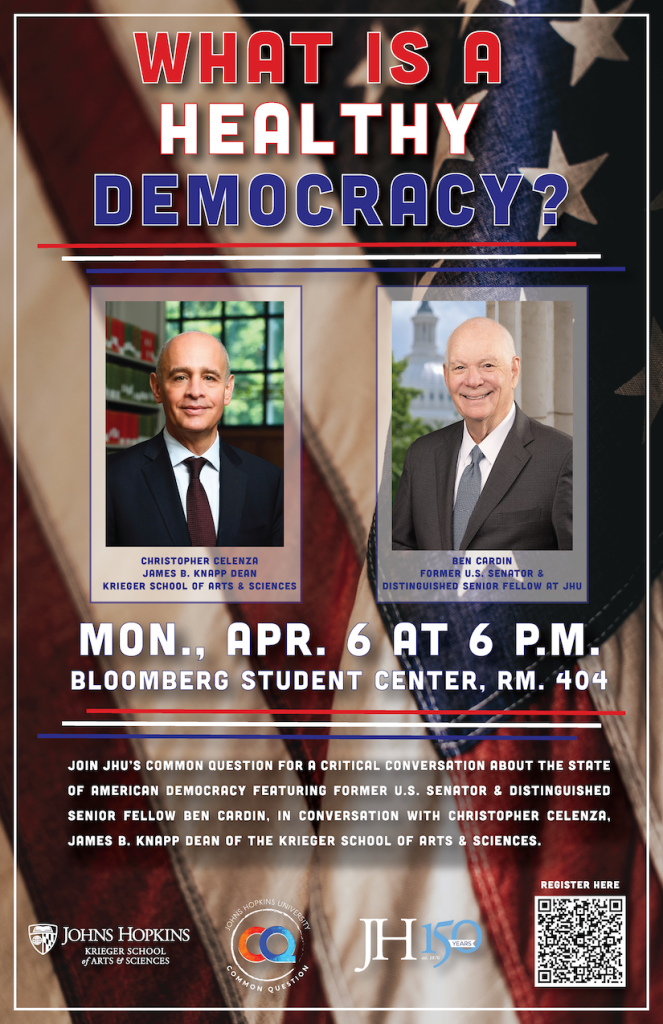 | What Is a Healthy Democracy?Mon., Apr. 6, 2026 at 6 p.m.
JHU’s Common Question and the Department of Political Science invite you to join us on April 6, 2026 at 6 p.m. in the Bloomberg Student Center (Rm 404) for “What Is a Healthy Democracy?” a special evening featuring former United States Senator from Maryland Ben Cardin, in conversation with Christopher Celenza, the James B. Knapp Dean of the Krieger School of Arts & Sciences. Together, Senator Cardin and Dean Celenza will explore the state of American democracy, reflecting on its current challenges and its future. This marquee spring event celebrates Senator Cardin’s appointment as a Distinguished Senior Fellow here at JHU and offers the Johns Hopkins community a rare opportunity to engage with a policy leader whose decades of public service have shaped both our national discourse and federal law. Doors will open at 5:45 p.m., the conversation will begin at 6 p.m., and the evening will conclude with a Q&A and catered reception, inviting thoughtful dialogue and connection around the enduring importance of democratic practice in the United States. |